
Taxes & compliance

How to use tax reports

Generate Spanish tax models such as 303 and 130, review draft figures, and track filing status.

1 min readUpdated 10.07.2026

Tax reports turn your invoicing and expense data into draft AEAT models. See how to generate a tax report, how to review Model 303, and how to generate libros registro.
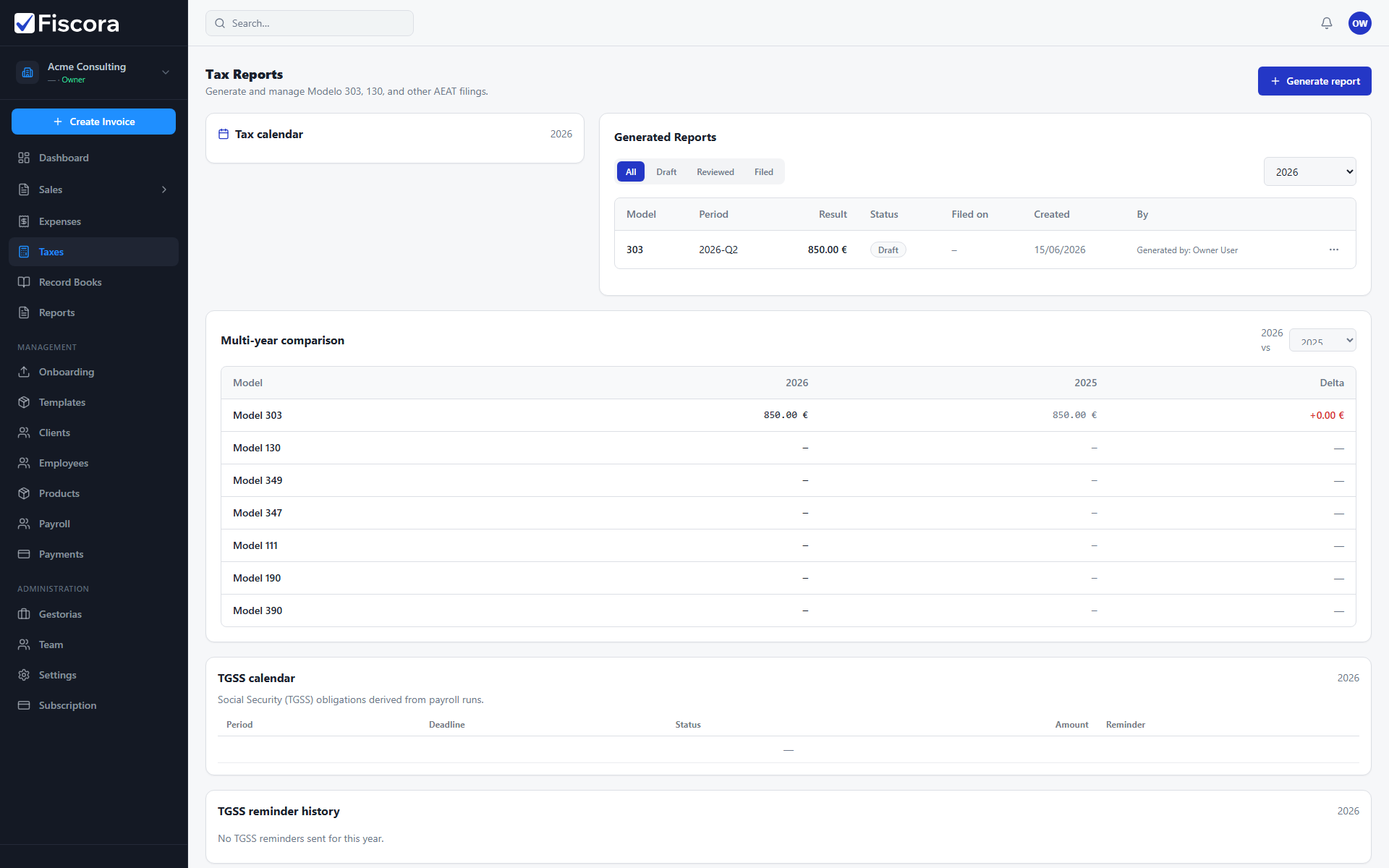
Tax Reports page with Generate report action and draft reports listed.

Open tax reports

  1. Select Taxes in the left navigation.
  2. Review the calendar and existing reports for the fiscal year.
  3. Use status tabs to filter draft, reviewed, and filed reports.

Generate a report

  1. Select Generate report.
  2. Choose the model, fiscal year, and quarter or period.
  3. Confirm generation and wait for Fiscora to calculate the draft values.

Review before filing

  1. Open a draft report to inspect calculated boxes and warnings.
  2. Mark the report as reviewed when the figures look correct.
  3. Export CSV or AEAT files if you need to submit outside Fiscora.
  4. Mark as filed after submission and store the AEAT reference when available.

Was this article helpful?

Still need help?

Share the context and we'll reply with practical guidance from support.

Open request

You may also find these useful

Taxes & compliance

How to review Model 303 (quarterly VAT)

Open a generated Model 303 report, review casillas, adjust values if needed, and mark it reviewed before filing.

Read article
Taxes & compliance

How to review Model 130 (IRPF advance payment)

Open a generated Model 130 report, validate revenue and payment casillas, and mark it reviewed before filing.

Read article
Taxes & compliance

How to generate libros registro

Create issued-invoice, received-invoice, and other mandatory record books for a chosen period.

Read article