
Taxes & compliance

How to configure Veri*Factu

Prepare Veri*Factu settings and upload your signing certificate before issuing compliant invoices in Spain.

1 min readUpdated 10.07.2026

Veri*Factu settings control whether issued invoices are chained and submitted under Spanish AEAT rules. See how to get a Veri*Factu certificate, how to upload a Veri*Factu certificate, and how to issue an invoice.
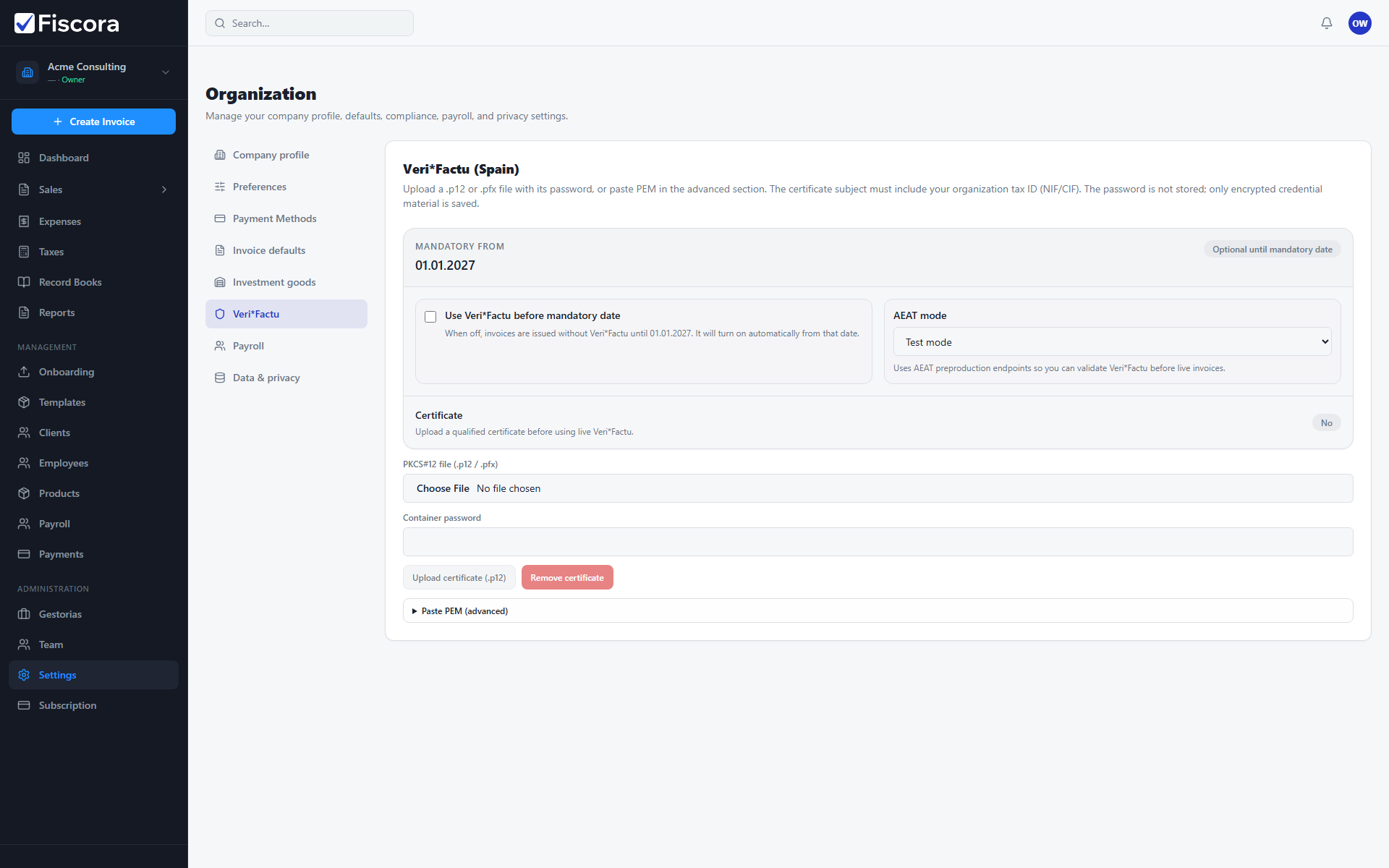
Veri*Factu settings showing mandatory date, AEAT mode, and certificate section.

Open Veri*Factu settings

  1. Select Settings in the left navigation.
  2. Open the Veri*Factu section.
  3. Review the mandatory date badge and current server status.

Choose mode and timing

  1. Enable early Veri*Factu use before the mandatory date if you want to test issuing.
  2. Select AEAT mode test or live depending on your rollout stage.
  3. Save settings after changing mode or early-use options.

Upload a certificate

  1. Upload a .p12 or .pfx certificate that matches your organization tax ID.
  2. Enter the certificate password when prompted — it is not stored in plain text.
  3. Confirm the certificate status shows ready before issuing live Veri*Factu invoices.

Was this article helpful?

Still need help?

Share the context and we'll reply with practical guidance from support.

Open request

You may also find these useful

Taxes & compliance

How to use tax reports

Generate Spanish tax models such as 303 and 130, review draft figures, and track filing status.

Read article
Taxes & compliance

How to review Model 303 (quarterly VAT)

Open a generated Model 303 report, review casillas, adjust values if needed, and mark it reviewed before filing.

Read article
Taxes & compliance

How to review Model 130 (IRPF advance payment)

Open a generated Model 130 report, validate revenue and payment casillas, and mark it reviewed before filing.

Read article